Dr. Brian Roberts
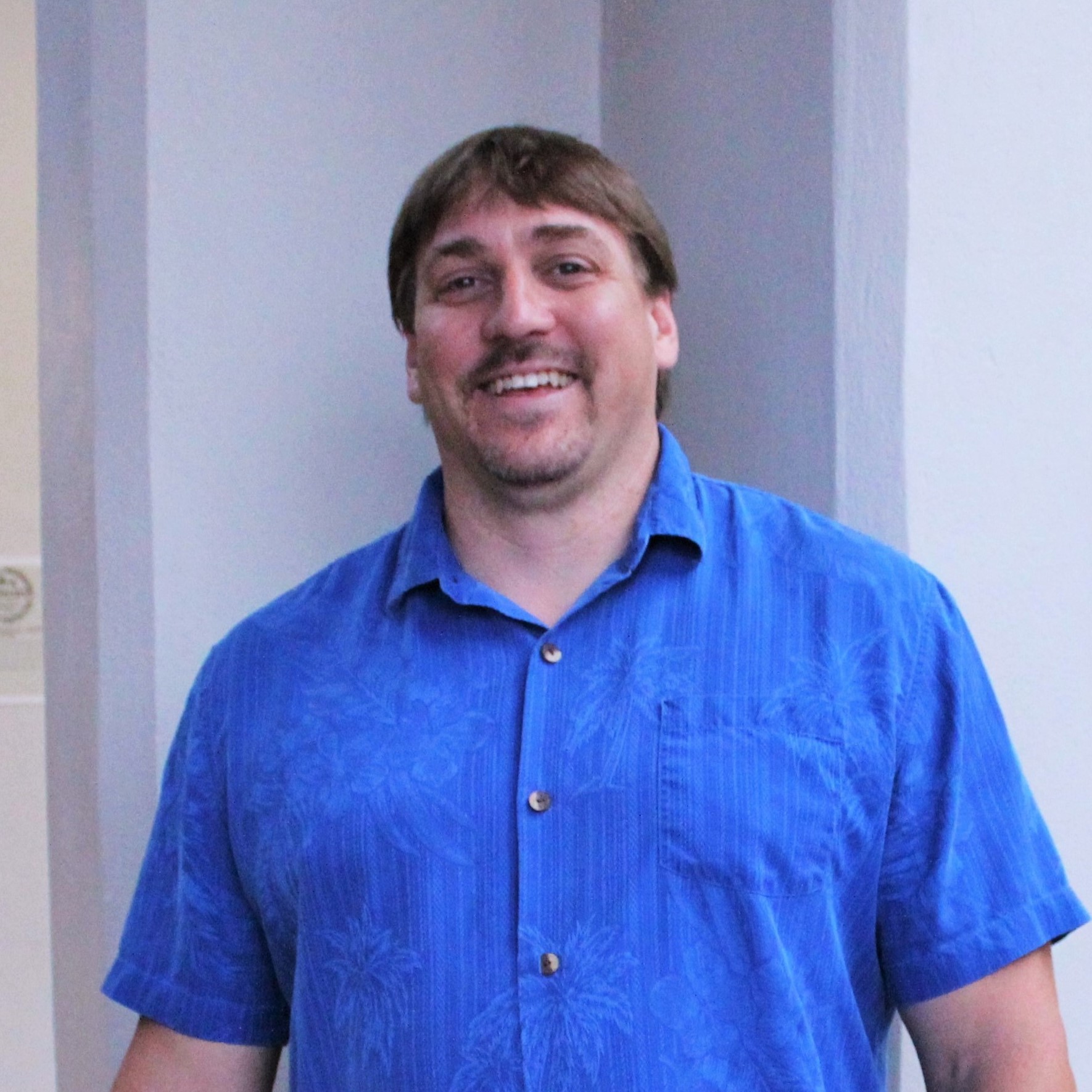
Executive Director and Chief Scientist / REU Program Director
[email protected]
985-851-2821
Roberts Lab Website | ORCID | ResearchGate | Google Scholar
Education
- Postdoctoral Research Associate, 2004-2007, Environmental Sciences Division, Oak Ridge National Laboratory
- Ph.D., 2004, Ecology and Evolutionary Biology, Cornell University
- M.A., 1996, Marine Biology, Boston University Marine Program
- B.S., 1995, Biology and Philosophy, College of William and Mary
Research Interests
The Roberts Lab is interested in understanding how ecosystems transform and retain carbon, nutrients, and energy. We are particularly interested in how human activities (e.g. land use changes, nutrient enrichment, climate change, and oil spills) alter the mechanisms that regulate trophic dynamics, biogeochemical cycling, and materials transport along the continuum from headwater streams and lakes to large rivers, wetlands, estuaries, and open-ocean ecosystems. We are also interested in how restoration efforts might ameliorate some of these deleterious impacts.
Current Projects
Current research in the Roberts Lab is broadly focused in three areas: 1) ecosystem ecology and biogeochemistry (particularly focused on terrestrial-aquatic and community-ecosystem linkages), 2) human-induced environmental impacts on wetland and aquatic ecosystems, and 3) restoration ecology. Ongoing projects include:
- Controls on wetland primary production and greenhouse gas fluxes
- Methane dynamics in wetland, estuarine and marine ecosystems
- Impacts of dredging on sand shoal ecosystems
- Mangrove production and biogeochemistry
- Biogeochemical cycling in estuaries and continental shelf ecosystems
- Influence of living shoreline restoration projects on plant and biogeochemical dynamics
- Coastal hypoxia and ocean acidification in the northern Gulf
- Pelagic and benthic primary & secondary production in the northern Gulf
- Effects of the Macondo Oil Spill on coastal ecosystems
- Wetland biogeochemistry, plant ecology, and microbial ecology
- Food webs and carbon flow in marsh ecosystems
- Salinity alterations and marsh creation project impacts on wetland ecosystems
- Stream ecosystem metabolism and biogeochemistry
Teaching
- Director of LUMCON’s Research Experiences for Undergraduates (REU) Program
- Changing Coastal Oceans (offered every spring semester)
Research Group
- Wendy Morrison, Lab Manager / Senior Research Associate
- Stacy Calhoun-Grosch, Postdoctoral Research Associate
- Yaolin Guo, Postdoctoral Research Associate (LSU)
- Chequita Brooks, Postdoctoral Research Associate
- Justin Pitre, Research Assistant II
- James Faxel, Research Assistant I
- Brielle Martin
- Maris Griffith, M.S. Student (Nicholls State University)
- Jacqueline Valladares, M.S. Student (University of Georgia)
Selected Publications
- Klinges D, Martin CW, Roberts BJ. 2025. Ecological associations of the coastal marsh periwinkle snail Littoraria irrorata: field and laboratory evidence of vegetation habitat preferences. PeerJ 13:e19071.
- Jones SF, et al. 2024. When and where can coastal wetland restoration increase carbon sequestration as a natural climate solution? Cambridge Prisms: Coastal Futures 2: e13.
- Martin CW, López-Duarte PC, Olin JA, Roberts BJ. 2023. Gulf of Mexico estuaries: ecology of the nearshore and coastal ecosystems impacted by the Deepwater Horizon oil spill. Frontiers in Environmental Science 11:1203443.
- Roberts BJ, Mulholland PJ, Hill WR. 2007. Multiple scales of temporal variability in ecosystem metabolism rates: results from two years of continuous monitoring in a forested headwater stream. Ecosystems 10(4): 588-606.
- Hill WR, Fanta SE, Roberts BJ. 2009. Quantifying phosphorus and light effects in stream algae. Limnology and Oceanography 54(1):368-380.
A complete publication list is available on the LUMCON website.