Dr. Ken Krauss
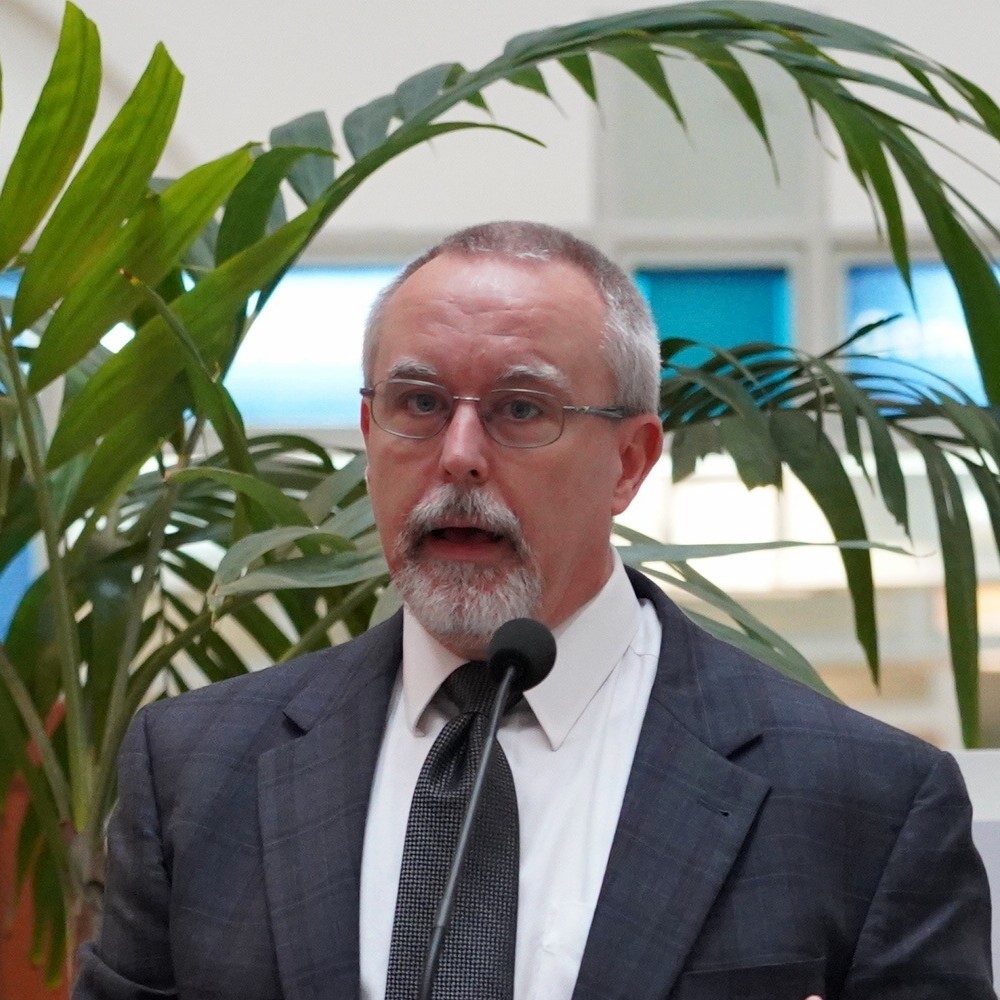
Associate Director of Science
[email protected]
1-337-344-9331
Education
- Ph.D., 2004, Environmental and Evolutionary Biology, University of Louisiana at Lafayette
- M.S., 1997, Forestry, Louisiana State University
- B.S., 1994, Biology (Wildlife Management), University of Southwestern Louisiana
Research Interests
Professor Krauss serves as the Associate Director for Research at the Louisiana Universities Marine Consortium. He studies the role of stress physiology on forested wetland water budgets, measures and models coastal wetland energy fluxes, and investigates sea-level rise vulnerability of mangroves and tidally influenced freshwater forested wetlands. Ken has a particular interest in international science outreach, developing agency and university partnerships, and finding new ways to measure or estimate wetland processes that might normally be limited by spatial scale or funding. His current projects focus primarily in the southeastern United States, including Louisiana, but he has active projects on several Pacific islands, as well as in Asia, New Zealand, and New Caledonia.
Professor Krauss joined the LUMCON staff in 2025 to assist faculty in building coastal research programs important to Louisiana but with international significance to science advancement. While maintaining on-going partnerships, Professor Krauss plans to re-engage coastal swamp forest restoration in Louisiana and focus intently on forest eco-physiology as a way to scale to physically relevant wetland processes. Insights will be used to rate the success of swamp forest restoration projects and develop new protocol, especially as river reintroduction projects are built at different scales. Combining engineering approaches, genetic improvement, and four decades of consortium partner study of the regeneration requirements of swamp forest species will facilitate gains in ecosystem health and aerial coverage over the coming decade. Ken will also continue his research on mangrove restoration, and on the eco-physiological underpinnings of tidal and supratidal forested wetland change with sea-level rise and salinization.
Current Projects
- Assessing mangrove ecosystem recovery through tidal hydrologic restoration
- Using stand water use to estimate forested wetland canopy CO2 exchange
- Assessing the value of tidal wetlands to water conservation: local-to-global
- Quantifying large unaccounted coastal wetland carbon pools on DoD installations
- Determining the impacts of coastal and watershed changes on upper estuaries: causes and implications of wetland ecosystem transitions along the US Atlantic and Gulf Coasts
- Carbon stock assessment, restoration planning, and monitoring of terrestrial, intertidal, and sub-tidal ecosystems for U.S. Naval Base Guam
- Pacific mangrove (PacMAN) resilience to sea-level rise: Expanding surface elevation change measurement for national assessment validation
Teaching
- Changing Coastal Oceans (co-instructor)
Students
- Zoe Shribman, Ph.D. Student, Tulane University, Earth & Environmental Sciences
- Nina Allen, M.S. Student, Louisiana State University, School of Renewable Natural Resources (co-advised with Dr. Andy Nyman)
Selected Publications
Books
- Conner, W.H., Doyle, T.W., and Krauss, K.W., eds. Ecology of Tidal Freshwater Forested Wetlands of the Southeastern United States. Springer, 505 p.
- Krauss, K.W., Zhu, Z, and Stagg, C.L., 2022. Wetland Carbon and Environmental Management. AGU Geophysical Monograph, 449 p.
Selected Journal Articles
- Lovelock, C.E., et al. (incl. Krauss, K.W.) 2015. The vulnerability of Indo-Pacific mangrove forests to sea level rise. Nature 526(7574): 559-563.
- Webb, E.L., Friess, D.A., Krauss, K.W., et al. 2013. A global standard for monitoring coastal wetland vulnerability to accelerated sea-level rise. Nature Climate Change 3(5): 458-465.
- Krauss, K.W., et al. 2014. How mangrove forests adjust to rising sea level. New Phytologist 202(1): 19-34.
- Saintilan, N., et al. (incl. Krauss, K.W.) 2022. Constraints on the adjustment of tidal marshes to accelerating sea-level rise. Science 377: 523-527.
- Krauss, K.W., and Osland, M.J., 2020. Tropical cyclones and the organization of mangrove forests: a review. Annals of Botany 125: 213-234.
- Adame, M.F., et al. (incl. Krauss, K.W.) 2024. All tidal wetlands are blue carbon ecosystems. BioScience 74: 253-268.
A complete publication list is available on the LUMCON website.